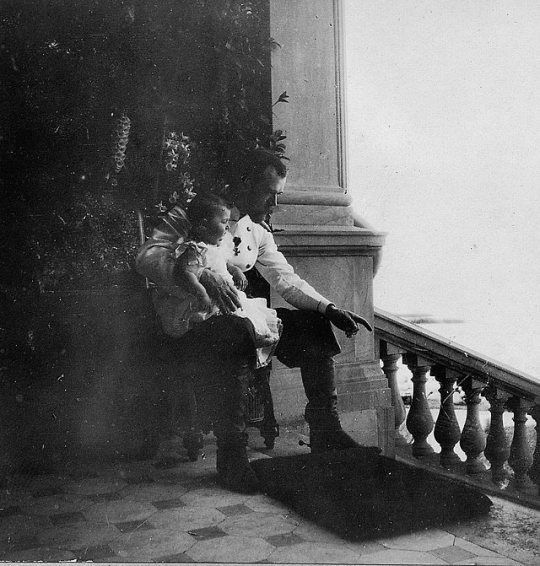
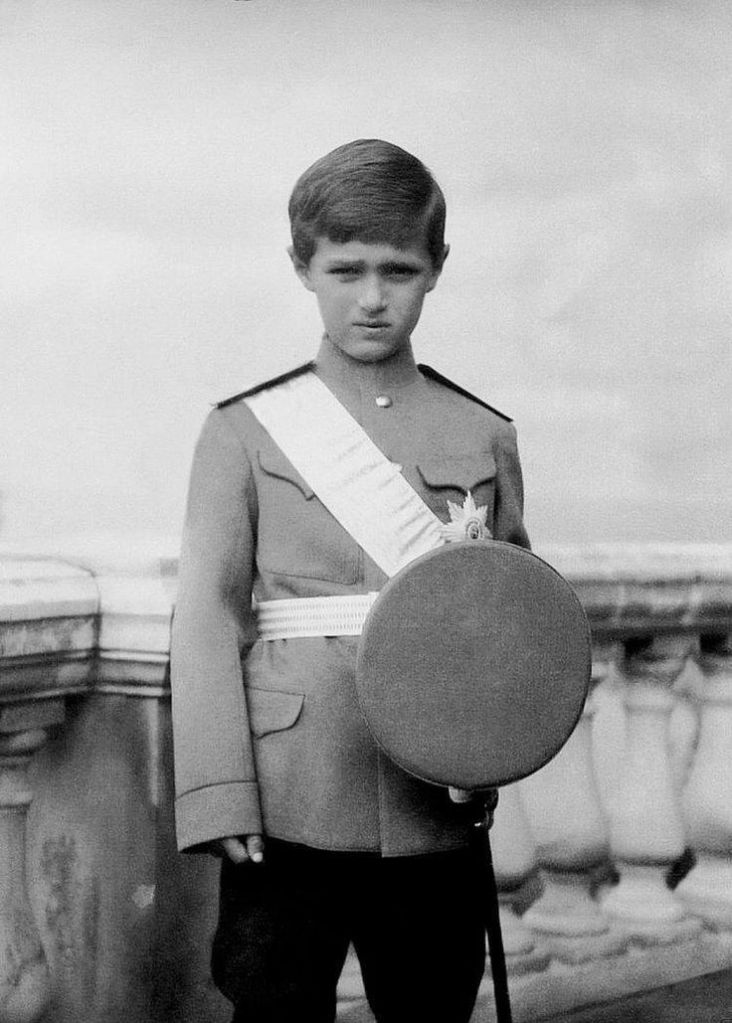
Born with haemophilia, a rare blood condition, Alexei Nikolaevich was the ‘heir apparent’ / Tsarevich to the 300-year-old Romanov dynasty.
Interestingly, I haven’t seen many discuss the impact of the Tsarevich’s condition on the fall of the Romanovs, and so I will!
To begin with, I feel as though I should mention how surprising it is to me that the majority (at least of the people I know) don’t realise the connection between Europe’s royal families, specifically during the early 20th century. When staring at photographs of the family members, it is blatantly obvious that they look like twins! Or more accurately, cousins.

The German Kaiser, the Russian Tsar and Britain’s King George V were first cousins. First cousins whose families between them all had at least one member with haemophilia – due to a recessive gene passed down from Queen Victoria, giving it the suitable nickname of the ‘Royal Disease’.
Normally, you would expect close family members to help each other out when needed, and it’s also probably fair to assume they would be more empathetic to one another and help each other a bit more as they were experiencing similar health issues and, therefore, primogeniture issues. However, throw a world war, revolution, and a ‘mad monk’ into the mix, and things don’t really go according to plan! …..How shocking!
The title ‘A Bleeding Throne’ is not just a metaphor that I am quite proud of for coming up with :); it does actually have some historical legitimacy! Many have heard of the famous Anastasia and hence it is pretty common knowledge that the Tsar and Tsarina (Nicholas II & Alexandra) had multiple children – five in total. Four daughters were born prior to Alexei, however a son was needed to ascend to the throne through the rights of primogeniture. Therefore, when Alexei was born in 1904, theoretically the Romanov’s relief, happiness and celebrations should’ve spread throughout Russia. Publicly this was true, however, in the midst of outward celebration Alexandra’s worst fears had come true.
The recessive haemophilia gene had been introduced by Queen Victoria and passed down to the royals of Europe, however, the gene was much more prominent in Germany (Alexandra’s home country) and its male royals. This is something that Alexandra knew and feared for her son. Unfortunately, a few hours after Alexei’s birth, her fears were confirmed to be true. A too-tight swaddle had pressed on his naval and caused bleeding at the recently cut umbilical cord. The tell-tale signs with a splatter of blood threw the new parents into protection mode.
There was a total clamp-down; they had to protect him from any injury or accident that could cause bleeding, but also, in the widest sense, it had to be kept state-secret. This was because, in Russia, only the son could ascend to the throne – having a weak heir inferred that the country of Russia was weak, and Alexei had been given a lifespan of only 16. Ultimately, the pair successfully kept Alexei’s conditions secret until 1912, when Alexei had a near-fatal accident.
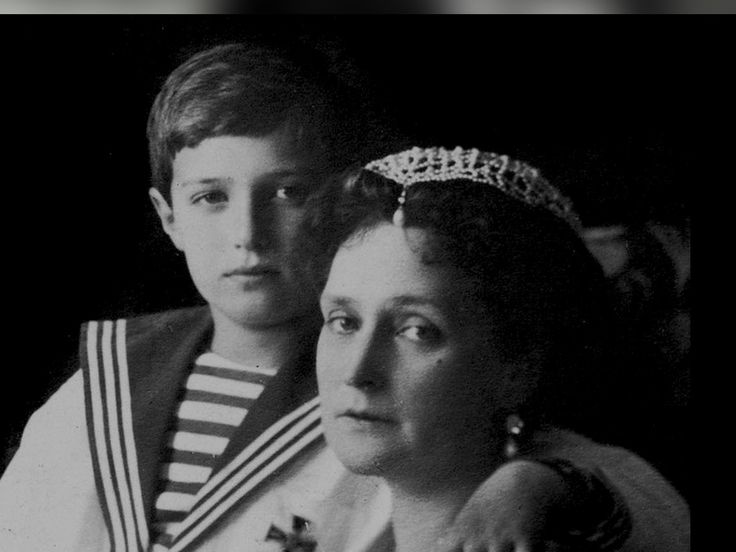
In the early 20th century, little was known about haemophilia, even though research into the disease was increasing due to its royal connection. As a result, to alleviate the pain, aspirin was used for Alexei’s pain. Of course nowadays we understand that aspirin is quite possibly one of the worst things you can give to a haemophiliac as it thins the blood, but the science wasn’t understood. However, upon finding out about the administration of aspirin one man immediately stopped it, his name was Rasputin – the ‘mad monk’.
Rasputin, a Siberian peasant, had been summoned by the Romanovs to treat Alexei in 1908 after a family friend made a recommendation. Whilst he was an unkempt, poor, filthy wanderer whose religious practices opposed the Russian Orthodox Church he was warmly welcomed due to his miraculous healing powers. Some say it was his hypnosis that allowed for a temporary cure of Alexei’s haemophilia, others suggest that by calming the Tsarina it alleviated Alexei’s stress and prevented flare-ups but either way he had a mysterious undeniable positive impact on Alexei’s health that outweighed his actions outside court. His reputation preceded him as a womaniser, drunk and charlatan, with even the Prime Minister (1911), Stolypin, sending a letter of warning to the Tsar about Rasputin’s misdeeds. However, even after the Tsar sent him away, the Tsarina begged for his return when Alexei’s health almost immediately began to decline. The Tsar allowed his return, kick-starting a dependancy on the monk that would result in a PR nightmare!!!
By 1915, world war had broken out and in response to a ‘message from God’ the Tsar went to the front-line, leaving behind his wife and ill son. I won’t go into too much detail but by 1915 revolution was brewing, after a failed revolution in 1905 the Bolsheviks had gone back to the drawing board and whilst they do not name Rasputin as a direct cause in any of their propaganda they do disseminate ideas about Rasputin and his impact, particularly on the Tsarina (who was now extremely dependant on him).
The Bolsheviks leaked a 1912 letter between the pair, in which the Tsarina had written:
“I kiss your hands and lay my head upon your blessed shoulders. I feel so joyful then (…) I love you.”
Tsarina Alexandra
Insinuating an affair had taken place (but this is most likely false as the Tsarina was a prudish, Victorian woman who would not have looked for sex in a man like Rasputin) .
However, the public clearly would’ve had quite the reaction to this as Alexei’s haemophilia (whilst now known about in the upper echelon of society) was still not public to the majority and so all that was now being presented to society was Rasputin as a symbol of the monarchy’s corruption as rumours of his “affair” with the Tsarina spread. The Tsar experienced a loss of prestige as a result of this – he was no longer seen as the divine ruler, but a weak autocrat unable to control his wife or hold onto his moral and political authority.
Second, he now controlled the bureaucracy in Petrograd. When Nicholas II was away commanding the army, he held significant sway over the Tsarina who was now effectively the ruler of Russia. This has two effects: one, his “ministerial leapfrogging” (constant dismissal and appointment of ministers) and inability to choose competent ministers resulted in a weak bureaucracy unable to meet Russia’s needs. Additionally, he also prevented information on the deteriorating situation in Petrograd from reaching Nicholas – resulting a series of unfortunate events leading up to the February Revolution of 1917.

An example of Bolshevik propaganda that supports these views is cartoons such as this one, which very clearly depicts Rasputin as the central figure, wielding power and influence over the Tsar, who had been chosen by God himself (according to the Divine Right of Kings).
As the influence and support of the Bolsheviks rose and the Romanovs’ reputation fell drastically, when the Revolution occurred, the people sided with the Bolsheviks – more notably, Vladimir Lenin. A year later, after first being caged and controlled in their (ironically) grand and overly-spacious houses and then being secretly moved around the country, the family was brutally assassinated on 17th July 1918 at Ipatiev House. Their deaths were not made public until 1927.
Therefore, if Aleksei had not been born with haemophilia, there wouldn’t have been this need for secrecy. The throne wouldn’t been threatened because Alexandra wouldn’t have embraced the help and support of Rasputin, who was hated and demonised. In many ways, Aleksei’s haemophilia set the ball rolling for the fall of the monarchy, because Alexandra was so hated. And once she took on Rasputin as a friend and advisor, the chips were down because so many, so many people in Russia hated them both, and thought they were conniving and that they were spies.
And so, things could have been quite different if Aleksei had not been born with haemophilia. I think in terms of the Romanovs, there was genuine potential for quite a different story if Aleksei had not been a haemophiliac. In recent discoveries, in the last 30 years or so, the most interesting thing from my point of view that has come to light is that of the four girls, only Anastasia was a carrier. And the sad thing was that the elder two girls weren’t married off because the other royal houses of Europe were dreading having haemophilia brought into their families. And of course, if people had known that they weren’t carriers there might have been a different story there. Those two girls could well have been married before the war and escaped being murdered by the Bolsheviks and therefore most likely would’ve provided refuge for their family when revolution broke out. Yet maybe the fate of the Romanovs would’ve already been decided by other factors.
Ultimately, there are quite a few big what-ifs that I feel would be very fun to ponder upon!



 Mimi's Mem's
Leave a comment