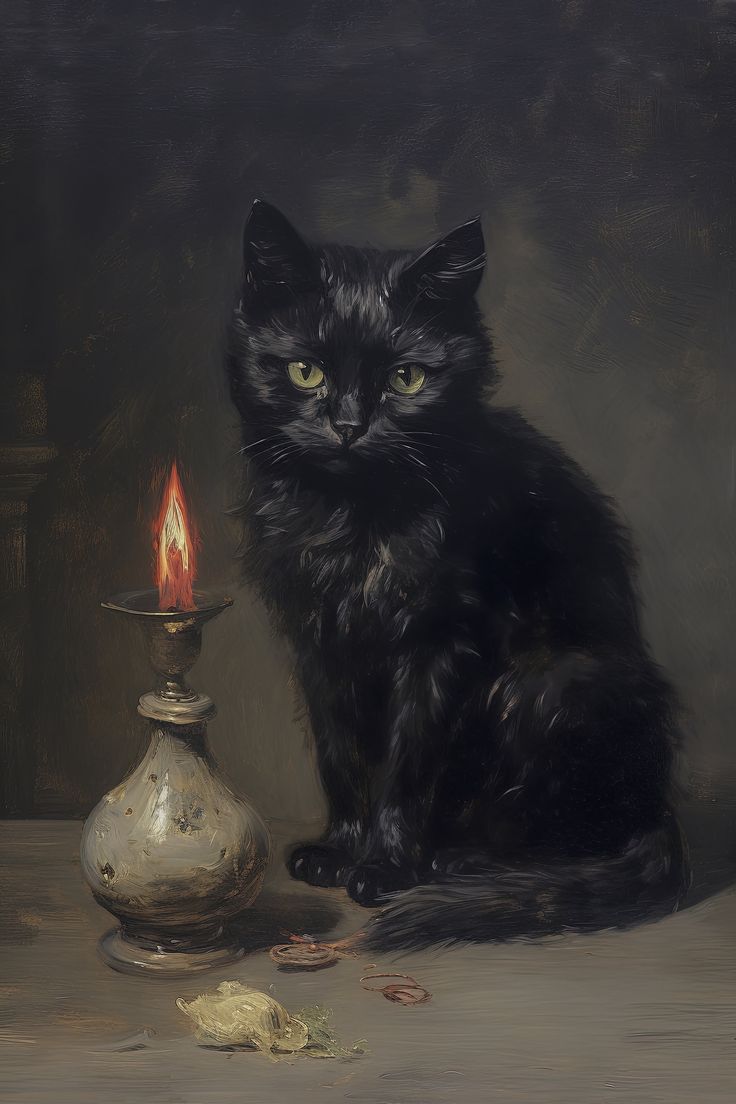
ladies, ‘hold your tongue’.
Commonly referred to as the Great European Witch Hunt, the years 1450-1750 saw thousands of innocent people facing trials – with roughly half of them subsequently executed.The majority of whom were women (70-80%). Multiple proposals have been made for the main cause(s) of this ‘craze’ and whilst I could write a never-ending page of analysis discussing each one I will quickly summarise the most frequent arguments below.
Firstly, the legal system; it is true that the rise in persecution coincided with the shift from an accusatorial system (that favoured the rights of the defendant) to an inquisitorial system (that favoured punishing the guilty). Ultimately, the Inquisitorial system came with challenges in proving the defendants guilt due to the nature of witchcraft as a concealed crime. I feel as though it should be quickly mentioned that in 1560 Europe was plunged into a mini ice-age resulting in poor harvests throughout and as a result those accused of witch-craft were often scapegoats for natural events such as poor harvests in a locality. Therefore, people relied heavily on proving the existence and activities of witches in order to relieve anxiety and fears. Anyways, to go back to my point, the need to prove ‘witches’ guilty put some pressure on the inquisitorial system which ultimately led to the use of torture being allowed (albeit with rules). More notably, judges began to see torture as ‘crimen exceptum‘ meaning that judges could authorise torture based on suspicion with no proof (if not for ‘crimen exceptum’ they would be violating the rules of judicial torture)!
“If the courts of Europe had strictly adhered to (…) rules of torture, then the adoption of this method of criminal investigation would not have led to the innumerable miscarriages of justice”
– Brian Levack: The Witch-Hunt in Early Modern Europe
Now is it really a surprise that courts throughout Europe then just absolutely abused the use of torture to extract confessions? Try to think of something more fun than watching your enemies’ limbs be distended by hundred-pound weights by the strappado.
It is therefore paramount to acknowledge the link between the use of torture and the positive feedback cycle that occurred thereafter; accused is tortured = they name others = the cycle persists. A clear example of this is the 1592 North Berwick Witch Trials, during which Agnes Sampson implicated 59 others alone.
Yet whilst the socioeconomic factors (harvests) and the legal system both played central roles it doesn’t explain why women were persecuted so heavily, which leads me nicely onto the popular and well-documented argument of misogyny.
No one has liked a gossip but the 15-18th century Europeans really did not like a gossip. Unfortunately for women, ‘gossips‘ existed in packs of women – a stereotype that has stood the test of time. Now, I can’t say exactly what they were gossiping about (and I wish it was Hailey vs Selena), but they were most likely sharing innocent information about who not to trust, where to go for a wander, cooking, sharing herbal remedies and I suppose snitching on people to one another. For women, gossip implied friendship. For men, gossip seemingly entailed anxiety. Remember, in a patriarchal society, men were meant to be the educated ones who socially had more power and yet England had just seen three consecutive Queens (if you count Lady Jane Grey) which posed an absolutely massive threat to the patriarchy. This anxiety for men most likely stemmed from fear of change and fear of female knowledge, they had suddenly seen women at the top gain ultimate power over their country through Queendom without marrying in and so something seedy must be happening?
The ‘gossips’ between women also tended to occur post-childbirth and would therefore have included intimate domestic information that men would not have known. As men were following the patriarchy this unknown information would’ve been massively unsettling and probably infuriating. The combination of women suddenly becoming Queens and the sharing of intimate unknown knowledge surely meant that the Devil was walking the Earth! As a result, gossiping was outlawed and demonised as witch-craft.
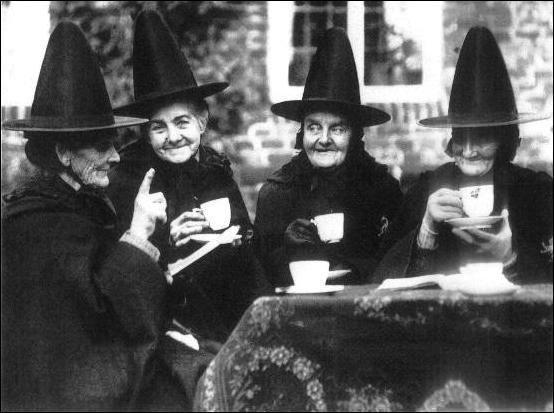
This demonisation nicely brings us all the way back to the use of torture, this time through the publicly humiliating scold’s bridle (also fittingly known as the gossip’s bridle). The bridle was an iron muzzle in an iron framework that enclosed the head with a bridle-bit that slid into the mouth and held down the tongue. This caused side-effects such as excessive saliva and mouth fatigue. But essentially, the bridle prevented the woman from speaking by not only physically holding down her tongue but figuratively teaching her to ‘hold her tongue’. Whilst this bridle is not in use today, this figurative idea of a girl/woman ‘holding her tongue’ to be polite and feminine in order to conform to the ideals of patriarchy is one that is still painfully evident in society today:
‘The historian can peg the point where a society begins its sharpest decline at the instant when women begin to take part’
– Scientology founder L. Ron Hubbard
As much as I wish I could write a full-length essay about the subject, I don’t exactly have the time to produce a respectable and well-read essay. Perhaps I could do my NEA on it! Anyways, to very promptly conclude, misogyny was the main facilitator for the rise in witch-craft persecution as the majority of accused were women!
A depressing thing to know but still paramount to acknowledge.



 Mimi's Mem's
Leave a comment